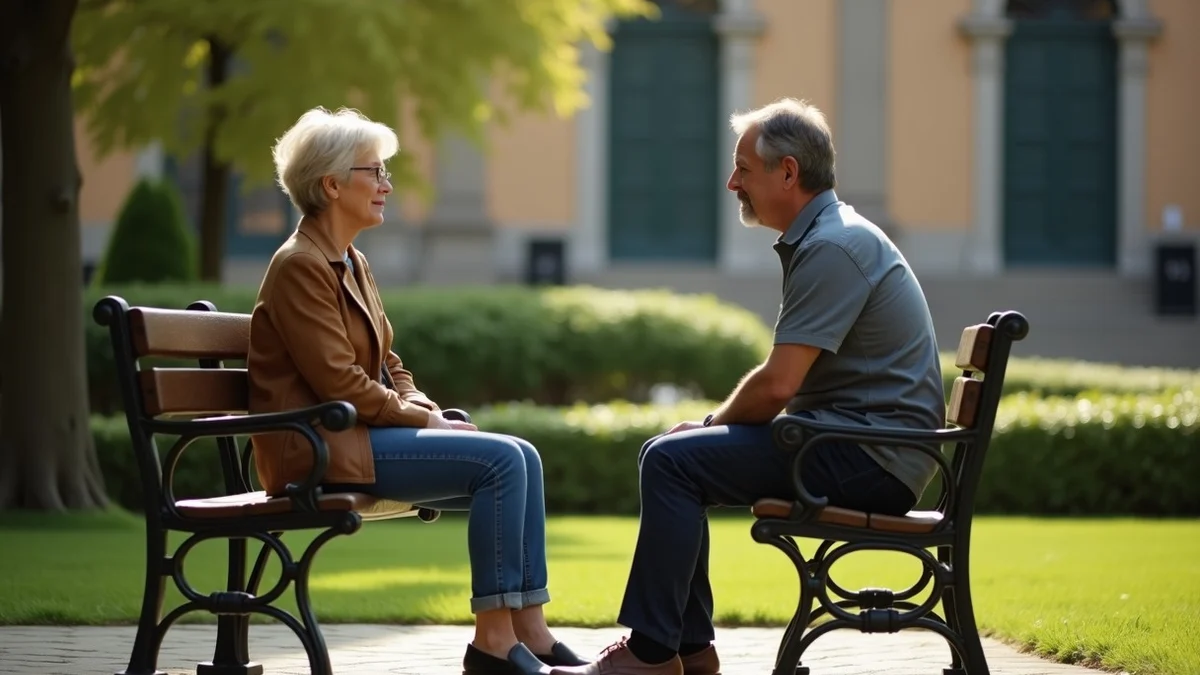
A marriage goal raises the stakes of dating, especially after a divorce has already rearranged a life. Dating for marriage after divorce works when you hold that goal openly while giving trust, compatibility, and conflict repair enough time to reveal themselves. A new commitment deserves more than relief from being alone or the comfort of a familiar future. It needs a shared view of daily partnership.
By Dating Again Guide · How this guide is edited
Decide what marriage means in your next chapter

The wish for a spouse often contains several wishes at once: companionship, a legal partnership, a stable home life, emotional security, or a sense that the divorce did not get the final word. Those wishes are valid. They are also different needs, and a new marriage will not meet all of them on its own.
Name the parts that matter most to you before attaching the whole future to a promising date. Is marriage important because you want a committed teammate for ordinary life? Does formal commitment carry personal or spiritual meaning? Are you hoping for social belonging after years of disruption? Honest answers create a standard for partnership, not a deadline for finding one.
Marriage becomes a rescue plan when it is expected to erase grief, settle fear about the future, or restore a former identity. That pressure turns availability into compatibility. A relationship worth building adds to a life that already has structure, friendships, interests, and room for your own judgment. The next chapter need not resemble the last one to count as a full life.
Share a long-term goal without turning early dates into interviews
Early conversations reveal direction through tone as much as content. Someone interested in a lasting partnership speaks about the future with enough specificity to show they have considered it, while still treating the connection in front of them as its own relationship.
State that you date with long-term partnership and marriage in mind once there is mutual interest. Then invite the other person to describe what they are seeking and how they see commitment fitting into their life. The point is to learn whether your directions match, not to extract a timetable.
A serious answer has room for nuance: a person may want marriage and still insist on getting to know a partner slowly. Vague future talk, repeated evasion, or pressure for immediate certainty gives useful information too. Warmth and curiosity belong on early dates; a lifetime decision does not.
Evaluate compatibility in the areas marriage will test
Chemistry starts a relationship; marriage puts ordinary life under one roof of expectations. Attraction and easy conversation matter, but they tell you little about how two people handle frustration, competing priorities, or a difficult season.
Values deserve direct attention. Talk about the shape of a good life, work and leisure, faith or non-faith, health habits, community, privacy, and family roles. For adults dating after divorce with children or other family responsibilities, daily obligations need frank recognition without turning a new partner into a solution for them. Independence matters as well: each partner needs a life and identity that remain intact inside commitment.
Money attitudes belong in the picture because they affect decisions, stress, and freedom. The question at this stage is not account disclosure. It is whether each person approaches spending, saving, debt, generosity, and lifestyle expectations with responsibility and openness.
Conflict is often more revealing than compatibility on a calm Sunday afternoon. Notice whether disagreement brings contempt, withdrawal, scorekeeping, defensiveness, or a genuine effort to understand and repair. The advantage of these conversations is that they expose the actual partnership on offer. The cost is that they remove some early fantasy. That is a worthwhile trade for someone seeking marriage.
Look for steady evidence that marriage interest is mutual

Plans made for next weekend and kept without drama carry more weight than sweeping promises about years ahead. Mutual interest shows up in consistent follow-through, reciprocal effort to spend time together, and a willingness to make room for the relationship within an already full life.
A grounded partner brings up the future when the relationship has earned that conversation, listens to your concerns, and lets their actions match their stated intentions. Both people take initiative. Both adjust after a misunderstanding. Both remain curious about the other person's values and daily reality.
Relationship red flags after a difficult marriage often feel familiar before they look alarming. Persistent blame directed at every former partner, secrecy that blocks basic trust, contempt during disagreement, and affection used to smooth over unresolved problems deserve attention. One awkward conversation proves little; a recurring pattern tells a much fuller story. Marriage interest is mutual when neither partner has to carry all the planning, reassurance, and emotional labor.
Keep marriage from becoming a shortcut out of loneliness
Loneliness turns a wedding into an answer for problems that belong elsewhere. After divorce, the quiet of a changed home, the loss of couple routines, and other people's assumptions about being single can make a fast attachment feel like proof of safety.
Rebound urgency narrows attention. A date who is available, admiring, or eager for commitment begins to look like the right partner before character and compatibility have had time to surface. Social comparison adds fuel: engagements, anniversaries, and well-meaning questions create the sense that everyone else has moved ahead. Their schedule has no authority over yours.
Permanence also gets idealized after an unstable or painful marriage. A proposal cannot repair old wounds, guarantee fidelity, or resolve a mismatch in values. Separate routines, friendships, interests, and emotional support keep a new relationship in proportion. They also make it easier to recognize a hard truth: a relationship can be sincere and still fall short of a marriage-worthy fit.
The strongest protection against rescue-plan thinking is a standard based on how life feels with this specific partner over time. Seek calm, respect, reliability, attraction, and shared effort—not merely the relief of no longer facing life alone.
Choose a deliberate point for evaluating a shared future
Real-life friction provides information that early excitement cannot. A shared future deserves review after enough ordinary time to see each other under stress, in disappointment, around family obligations, and after a disagreement that required repair. No universal number of dates supplies that knowledge.
Set a deliberate conversation before an engagement, a shared home, or formal wedding planning. Discuss whether each of you feels known and respected, whether conflict has been addressed without punishment or avoidance, and whether your visions of daily partnership still line up. Ask whether both partners have seen the less polished parts of the relationship and still feel a steady willingness to build.
Some answers require more than affection. A couple should be able to speak plainly about values, lifestyle, independence, family roles, money attitudes, and how they will handle inevitable strain. Where serious intent exists but important answers remain thin, more time is the sensible response. Premarital counseling also offers a structured setting for conversations that couples often postpone until after a wedding.
Commitment earns its place at the end of this evaluation, not at the beginning. That order protects the marriage you say you want.
Your next move is to define the conditions under which marriage would feel earned: shared values, reciprocal effort, repair after conflict, and a future that fits both lives. Bring those conditions into dating calmly. The right relationship will grow stronger under that standard, not weaker.